
In Uganda, where the majority of households still rely on traditional biomass fuels for daily cooking, Liquefied Petroleum Gas (LPG) represents a critical pathway toward cleaner, more efficient energy use. However, since the start of 2026, LPG prices have climbed steadily, adding pressure to already strained household budgets. This analysis draws from findings of Neofacts’ market research and data collection efforts.
About Neofacts: Delivering Reliable Market Research and Data Collection in Uganda
Neofacts is a premier market research company dedicated to providing accurate, timely insights on critical economic indicators, with a strong focus on cost-of-living trends across Uganda and the broader East African region. Our work empowers the general public, businesses, policymakers, and development partners with data that informs better decisions. Through systematic data collection methods including regular price monitoring at retail outlets and distribution points, surveys with households and LPG vendors, and analysis of supply chain dynamics we track key commodities like fuel, food, and energy. Our monthly monitors on petrol, diesel, and now LPG form part of a comprehensive suite of insights designed to highlight emerging pressures on Ugandan households. These efforts deliver actionable business insights that help the public anticipate trends, manage risks, and identify opportunities in the evolving energy landscape.
The Broader Context: Rising Energy Costs in 2026
LPG price increases in Uganda do not occur in isolation. Globally and regionally, 2026 has seen significant volatility in energy markets. Disruptions in key supply routes, such as the Strait of Hormuz, combined with geopolitical tensions and rising crude oil prices, have driven up import costs for LPG across East Africa.
Uganda imports nearly all its LPG, making domestic prices highly sensitive to international benchmarks, currency fluctuations, transportation costs, and local distribution margins. These global pressures have translated into higher acquisition costs for importers and distributors, which are ultimately passed on to consumers. Compared to petrol and diesel which experienced steeper of up to 40%, LPG increases have been somewhat contained. However, even moderate hikes matter significantly for a fuel used primarily for cooking in urban and peri-urban households. Many families already juggle multiple expenses, and incremental rises in LPG erode purchasing power while slowing the shift away from cheaper but dirtier alternatives like charcoal.
Key Findings from Neofacts’ LPG Price Monitor – June 2026

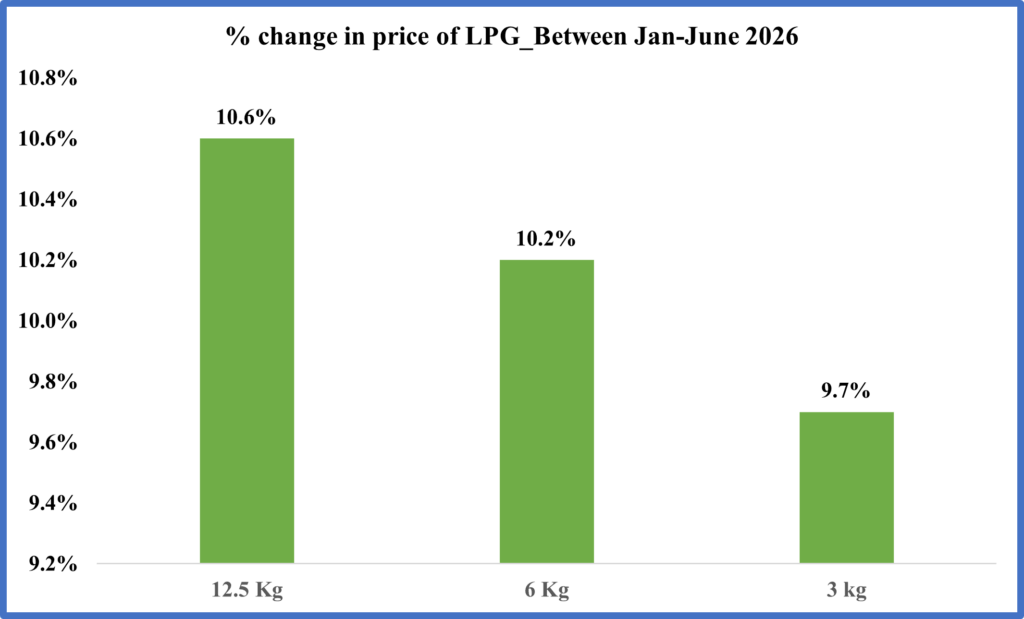
Our latest data collection exercise tracked retail prices for the most common household cylinder sizes across major urban centres and distribution networks. The results show consistent upward movement since January 2026:
- 12.5 kg cylinders: +10.6%
- 6 kg cylinders: +10.2%
- 3 kg cylinders: +9.7%
The slightly lower percentage increase for smaller 3 kg cylinders may reflect efforts by some suppliers to keep entry-level options more accessible, as these are popular among lower-income or first-time LPG users. Nevertheless, across all sizes, the cumulative effect since the beginning of the year adds a noticeable burden to monthly household energy expenditures. These figures come from Neofacts’ ongoing price surveillance and cross-verification with vendors and consumers, ensuring robust and representative business insights.
Why Are LPG Prices Rising?
Several interconnected factors explain the observed increases:
- Global Supply Chain Pressures; Disruptions in major LPG-producing regions and shipping routes have tightened supply and elevated international prices.
- Import Dependency; Uganda’s heavy reliance on imported LPG means local prices closely track global trends plus freight, duties, and currency effects.
- Distribution and Operational Costs; Rising fuel costs (petrol and diesel) increase transportation expenses for LPG distributors, creating a secondary ripple effect.
- Demand Dynamics; Steady urbanisation and gradual awareness of clean cooking benefits support demand, though price sensitivity remains high.
Impact on Households and Clean Cooking Adoption
For many Ugandan families, especially in urban areas where charcoal is already expensive, LPG offers convenience, speed, and reduced indoor air pollution. However, price sensitivity is a major barrier. Even a 10% increase can push marginal users back toward charcoal or firewood, particularly among lower- and middle-income households. The 3 kg cylinder, often the most affordable entry point, has seen a notable rise, potentially discouraging new adopters. This slows the national transition to cleaner cooking fuels a key goal under Uganda’s National Integrated Clean Cooking Strategy (NICCS) framework aiming to transition all Ugandans to clean, efficient, and safe cooking options by 2040.
Environmental and Health Implications
The environmental stakes are high. Widespread reliance on charcoal and firewood drives deforestation, forest degradation, and biodiversity loss. Charcoal production often involves unsustainable harvesting, contributing to soil erosion and reduced carbon sequestration.
From a health perspective, traditional biomass cooking releases high levels of household air pollution, linked to respiratory illnesses, particularly affecting women and children who spend more time near cooking fires. Transitioning to LPG significantly reduces these risks while lowering black carbon and greenhouse gas emissions compared to inefficient charcoal use.
When LPG prices rise, low-income households are more likely to stick with or revert to charcoal. This perpetuates a cycle of environmental harm and health burdens, undermining progress toward cleaner cooking goals and national climate commitments.
Broader Implications and Business Insights
For Households: Rising LPG costs squeeze budgets and may delay or reverse clean cooking adoption. Families may need to ration usage or combine fuels, reducing the health and convenience benefits of LPG.
For Businesses and the LPG Sector: Distributors and marketers face margin pressures and must balance price competitiveness with viability. Business insights from monitors like ours can guide inventory planning, pricing strategies, and expansion into smaller-cylinder or pay-as-you-cook models that improve accessibility.
For the Environment and Climate Goals: Without measures to cushion price shocks, the shift from biomass will slow, prolonging deforestation and emissions. Integrated approaches combining LPG promotion with sustainable charcoal alternatives (briquettes) and improved stoves offer the best path forward.
Looking Ahead
LPG prices in Uganda are likely to remain sensitive to global energy markets throughout 2026 and beyond. While the June increases are moderate relative to liquid fuels, they highlight the importance of building resilience in the clean cooking value chain. Ultimately, making LPG more affordable and accessible is not just an economic issue it is essential for public health, environmental sustainability, and inclusive development in Uganda.
Neofacts will continue its monthly data collection and market research to provide up-to-date insights.
Stay informed with Neofacts. Research. Learn. Inform.